Kentucky’s Revolution: Life on the American Frontier
Bring Kentucky's Revolutionary History to Life in Your Community
Traveling Panels Educational Exhibition
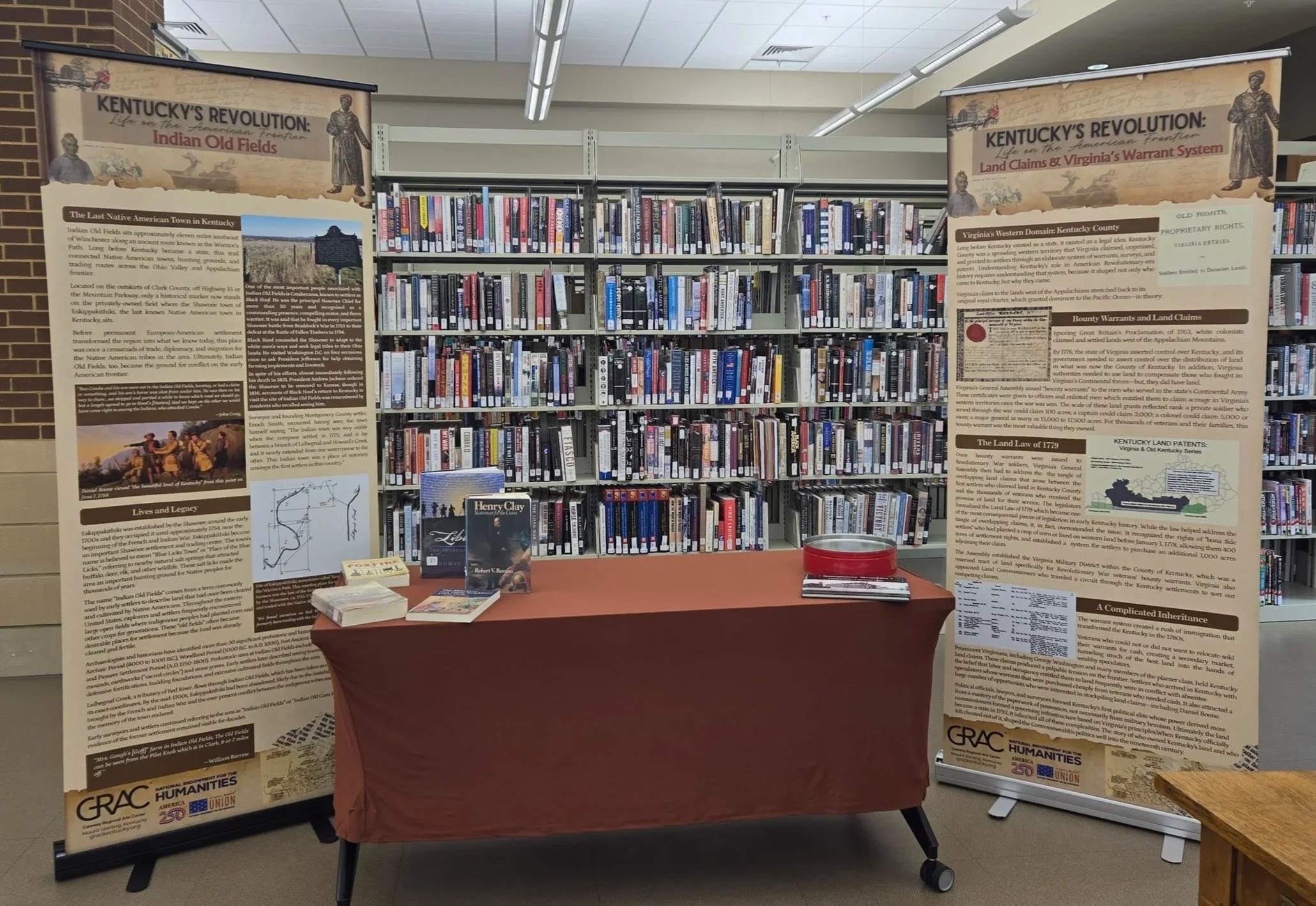
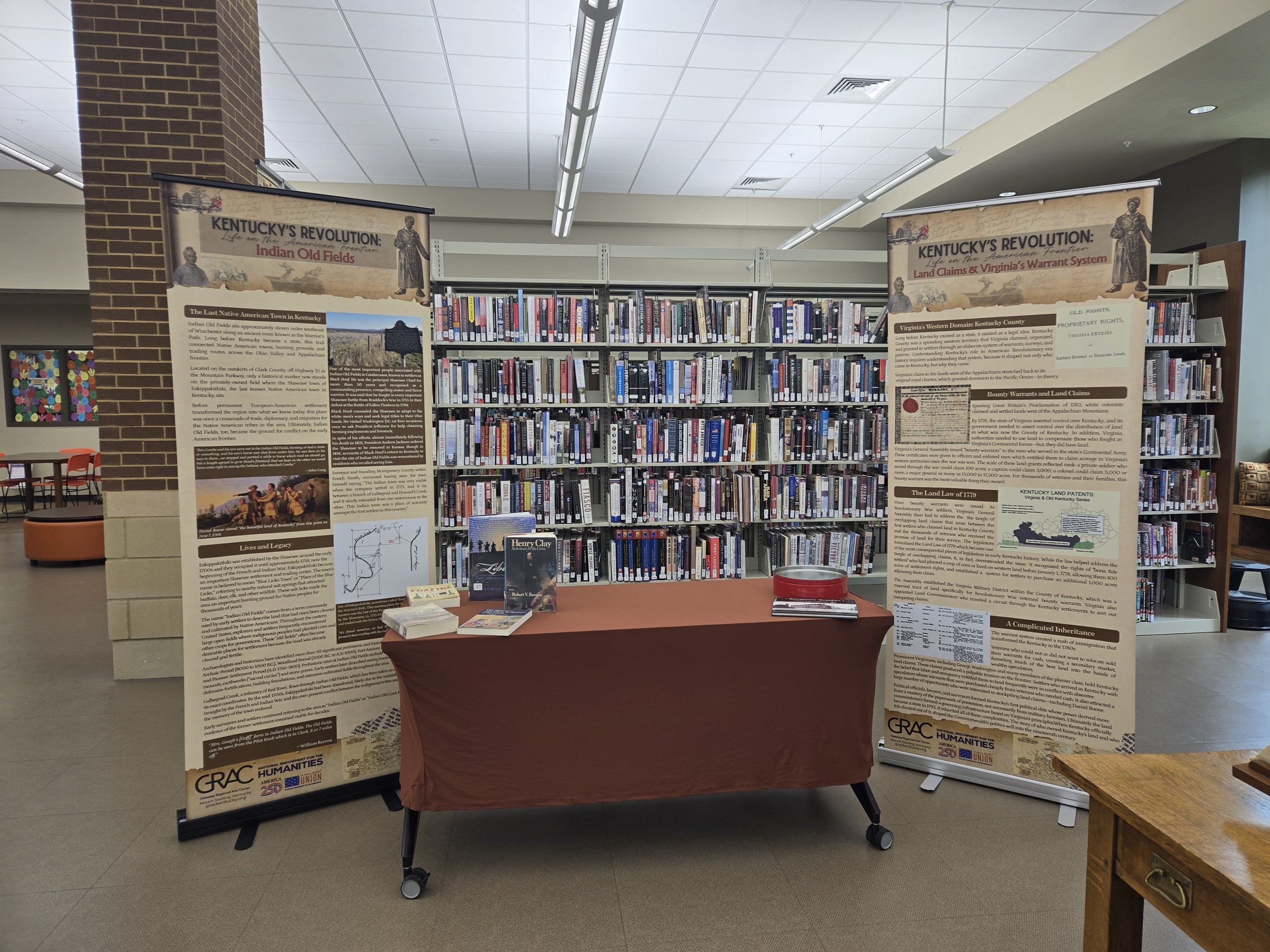
Libraries, schools, historical societies, museums, and community organizations throughout Kentucky are invited to host Kentucky During the American Revolution, a traveling collection of educational panels designed to inspire curiosity, conversation, and a deeper understanding of the Commonwealth's history.
The exhibition connects familiar landscapes and local histories with the larger story of America's founding. Whether displayed in a school library, community center, museum, or public gathering space, the panels offer an accessible way for visitors of all ages to learn about the people, places, and events that helped make Kentucky what it is today.
The exhibition is especially well suited for classroom instruction, educational programming, local history events, and community celebrations commemorating America's and the Commonwealth’s 250th anniversary.
Kentucky During the American Revolution brings these stories to life through a traveling educational exhibition exploring Kentucky's role in the Revolutionary era and the events that helped shape its future.
History is all around us—in the landscapes we inhabit, the places we call home, and the stories passed down. Understanding how Kentucky came to be the place we know today begins with discovering the people, events, and experiences that shaped its past.
From the Indigenous peoples who lived on and maintained ties to these lands long before Kentucky became a state, to the arrival of settlers, competing claims to territory, Revolutionary War conflicts, and the road to statehood, the exhibition invites visitors to discover the complex and interconnected stories of Kentucky's early days.
How to Borrow the Exhibition
COST AND SECURITY DEPOSIT
The traveling exhibition is available free of charge to eligible schools, libraries, and community organizations for a designated loan period. Advance reservations are required, and availability is subject to the exhibition schedule. There is no rental fee to borrow the exhibition. A refundable security deposit of $50 is required to help protect the panels against damage. The deposit will be returned following inspection of the exhibition when it returns, subject to the terms of the loan agreement.
LOAN PERIOD
Requests for specific dates will be accommodated based on availability. Organizations may reserve the exhibition for a designated period of time:
1 week
2 weeks
3 weeks
1 month
SHIPPING, DELIVERY, AND PICKUP
Organizations may arrange to receive the exhibition through shipping, scheduled delivery, or pickup. Transportation details and any applicable costs will be confirmed during the reservation process.
EXHIBITION SETUP AND CARE
Borrowing organizations are responsible for providing a suitable indoor display space, following installation and handling instructions, and ensuring the panels are safely maintained throughout the loan period.
QUESTIONS
Anna Kline, Special Projects Manager
anna@grackentucky.org
601-212-7387
Exhibition Details
-
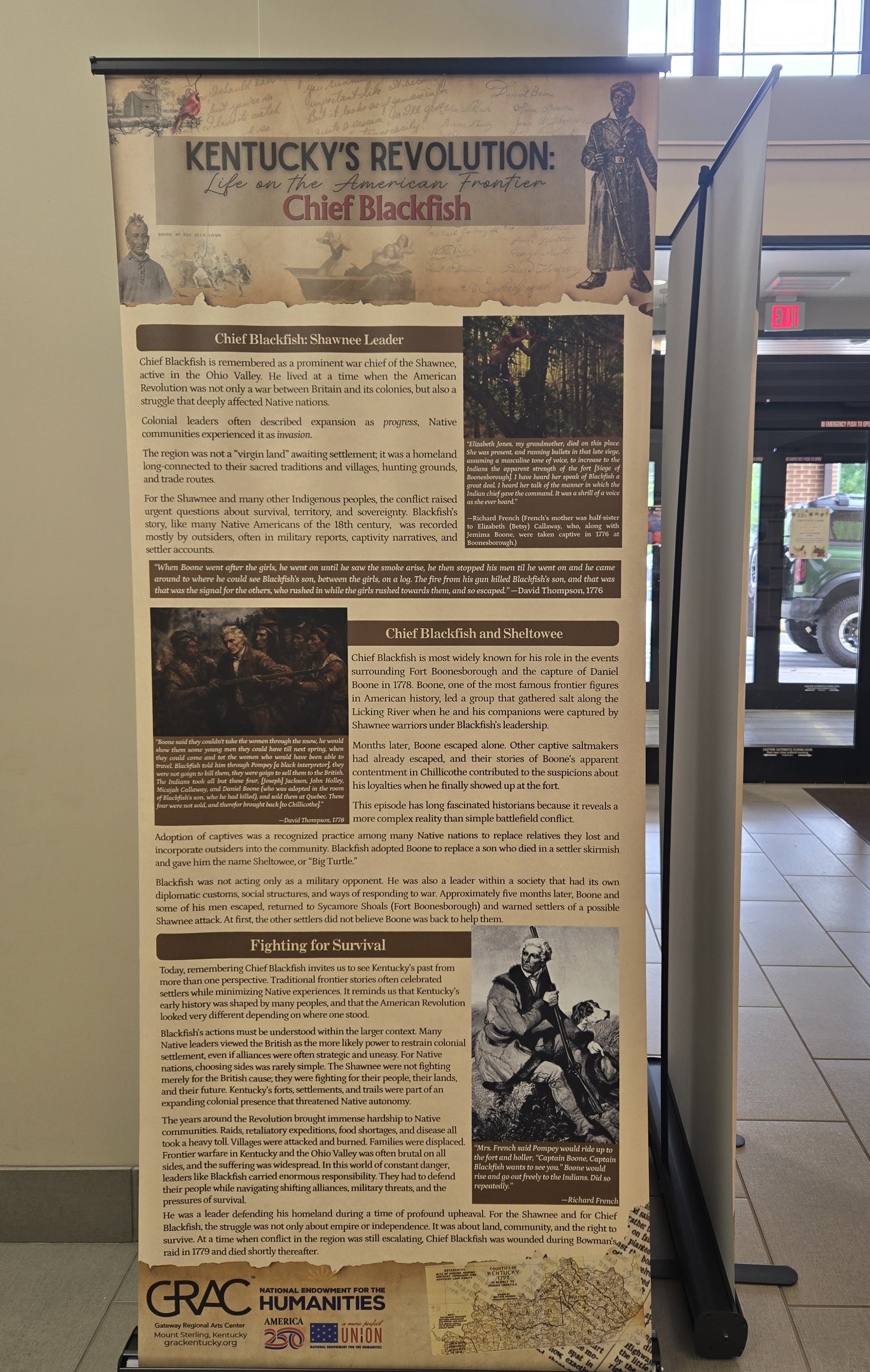
Explore the life and legacy of Chief Blackfish, a prominent Shawnee leader during the American Revolution. This panel examines the experiences of Native American communities on the Kentucky frontier, highlighting the struggle for land, sovereignty, and survival. Through historical accounts and illustrations, visitors will discover Chief Blackfish’s connection to Daniel Boone and Fort Boonesborough while gaining a deeper understanding of the American Revolution from an Indigenous perspective.
Dimensions: 33inW x 81inH
-
Discover the story of George Rogers Clark, one of the most influential military leaders on the western frontier during the American Revolution. This panel explores Clark’s early experiences in Kentucky, his daring military campaigns, and his role in expanding American control of the Northwest Territory. Through historical accounts, maps, and illustrations, visitors will learn about the challenges of frontier warfare, Clark’s military strategies, and the lasting impact of his actions on Kentucky and the developing nation.
Dimensions: 33inW x 81inH
-
Explore the history of Indian Old Fields, once home to a thriving Shawnee community and recognized as the last known Native American town in Kentucky. Located in present-day Clark County, this historic site served as an important center for trade, travel, and cultural exchange long before European-American settlement. Through historical accounts, maps, and illustrations, visitors will discover the significance of this community, its connections to notable Shawnee leaders, and the lasting legacy of Native American life in Kentucky.
Dimensions: 33inW x 81inH
-
Explore the complex relationships between Native American nations and European-American settlers during Kentucky’s frontier era. This panel examines the competing views of land ownership, territorial expansion, and the conflicts that shaped Kentucky during the American Revolution. Through historical accounts, maps, and illustrations, visitors will gain insight into the experiences of both Indigenous communities and settlers, the challenges of frontier life, and the lasting impact of these conflicts on Kentucky’s history.
Dimensions: 33inW x 81inH
-
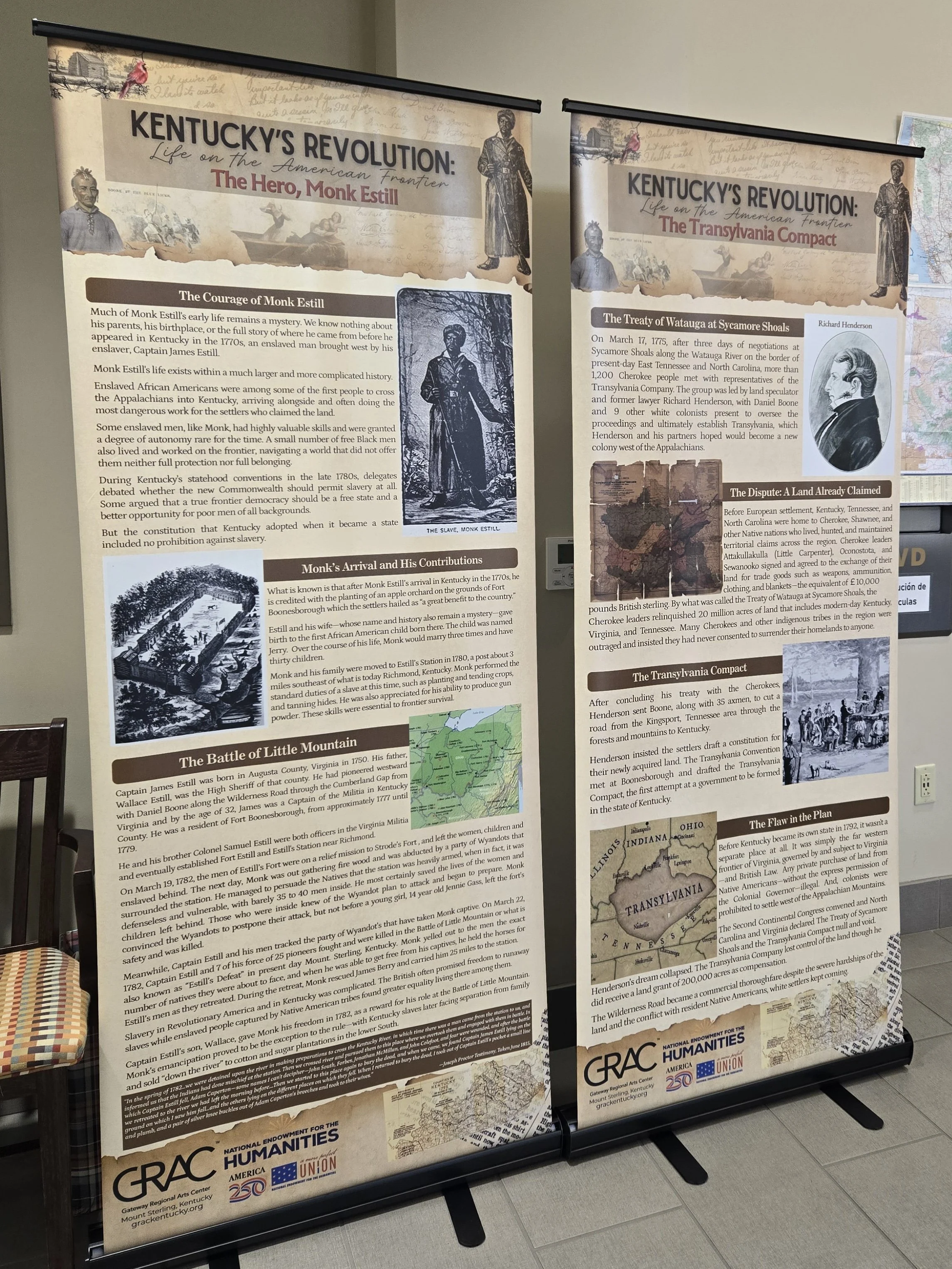
Discover the remarkable story of Monk Estill, an enslaved African American whose courage and contributions left a lasting mark on Kentucky’s frontier history. This panel explores Monk’s life, his role in the early settlement of Kentucky, and his heroic actions during the Battle of Little Mountain, also known as Estill’s Defeat. Through historical accounts, maps, and illustrations, visitors will gain insight into the experiences of enslaved African Americans on the frontier and the often-overlooked individuals who helped shape Kentucky’s history.
Dimensions: 33inW x 81inH
-
Explore one of the earliest attempts to establish a new government on the Kentucky frontier. This panel examines the ambitious plans of Richard Henderson and the Transylvania Company, their negotiations with Cherokee leaders, and the role of Daniel Boone in opening the region to settlement. Through historical accounts, maps, and illustrations, visitors will discover the competing claims to Kentucky’s land, the creation of the Transylvania Compact, and the political and territorial challenges that shaped Kentucky’s early history.
Dimensions: 33inW x 81inH
-
Discover how Kentucky’s land was claimed, distributed, and settled during and after the American Revolution. This panel explores Virginia’s land warrant system, the use of land grants to reward Revolutionary War veterans, and the laws that shaped Kentucky’s early settlement. Through historical documents, maps, and illustrations, visitors will learn about competing land claims, the influence of land speculation, and how decisions about land ownership helped shape Kentucky’s development and political landscape.
Dimensions: 33inW x 81inH
Educational Resources
Bring Kentucky's Revolutionary history into the classroom with accompanying educational resources below, which are designed to encourage students in historical inquiry, creative exploration, and critical thinking.
Grade-specific teacher activity guides offer engaging opportunities for students to investigate primary sources, examine historical perspectives, explore Kentucky's early history, and consider how the past continues to shape the present.
Activities are aligned with relevant Kentucky Academic Standards for Social Studies and can be adapted for classroom instruction, library programming, and community learning.
[Grades 1–4 Teacher Guide]
[Grades 5–6 Teacher Guide]
[Grades 7–8 Teacher Guide]
[Grades 9–10 Teacher Guide]
[Grades 11–12 Teacher Guide]
Kentucky During the American Revolution is presented by Gateway Regional Arts Center, the National Endowment of Humanities, and America 250 in recognition of America's 250th anniversary.